Picking the right Aluminum Extrusionfor your project is pretty important, really. Industry reports show that this industry is growing at about 5% a year, mainly because everyone’s after lightweight materials. From cars to electronics, Aluminum Extrusions are everywhere — their versatility is truly unmatched. I remember John Smith from Alcoa mentioning that "choosing the right extrusion can really make or break your project's success," which kinda hits the nail on the head.
But honestly, figuring out which one to go with isn’t always straightforward. There are so many things to think about — alloy type, wall thickness, surface finish — and each of these choices impacts performance AND budget. A wrong move here can lead to wasted materials or, worse, delays in your timeline.
So, paying close attention when selecting your material is key. Take some time to understand what the specs actually mean, and think about what your project needs in the long run. Will that extrusion hold up? Does it align with your goals? Because doing this right doesn’t just improve efficiency — it also boosts durability. These steps aren’t just formalities; they’re critical if you want your project to turn out successfully.

Understanding Aluminum Extrusion and Its Applications
Aluminum extrusion is an essential fabrication process. It creates shapes that are lightweight and durable. This makes it a top choice for various industries. According to a recent report from the Aluminum Association, the global aluminum extrusion market is projected to reach $80 billion by 2025. This growth indicates its wide-ranging applications.
Applications of aluminum extrusion span construction, automotive, and electronics. In construction, frame extrusion aluminum profiles are often used for window frames and structural components. These profiles offer strength without significant weight. In the automotive sector, extrusions help reduce vehicle weight, enhancing fuel efficiency. Systems that support electronics and machinery also rely heavily on aluminum for its thermal conductivity and corrosion resistance.
Despite its advantages, choosing the right extrusion can be challenging. Not all aluminum profiles are suitable for every application. Engineers must consider factors like alloy type, precision requirements, and environmental conditions. A mismatch can lead to structural failures or inefficiencies. This highlights the importance of thoughtful selection. Each project demands careful evaluation of material properties and manufacturing capabilities.
Identifying Key Factors for Project Requirements
When selecting the best aluminum extrusion for your project, identifying key factors is crucial. Different applications require various properties. For example, the strength, weight, and corrosion resistance of the Aluminum Framing Extrusion matter significantly. The Aluminum Association states that aluminum has a strength-to-weight ratio that is about 1/3 that of steel. This makes it an excellent choice for structural applications.
Tip: Consider the environment where the aluminum extrusions will be used. If your project is outdoors, look for coatings that enhance corrosion resistance. This can prolong the life of your structure and save costs in the long run.
Think about the dimensions and tolerances required. A report by MarketsandMarkets suggests that the precision of extrusions can dramatically affect performance and aesthetic quality. Tight tolerances facilitate better assembly and reduce scrap rates. Projects often fall short due to an oversight in these specifications.
Tip: Use modeling software to visualize your design before finalizing dimensions. It helps spot potential pitfalls early on. Focus on every detail, as overlooking small factors can lead to expensive reworks later. Remember, the right choice in aluminum framing extrusion is not just about cost; it’s about fitting your project’s unique demands.
Selecting the Right Alloy for Durability and Strength
Choosing the right aluminum alloy is crucial for the durability and strength of your project. Various alloys have unique physical and mechanical properties that can significantly impact performance. For instance, alloy 6061 is commonly used for its balance of strength and corrosion resistance. It offers a tensile strength of about 310 MPa. This makes it suitable for structural applications in various industries. However, it may not always be the best option for high-stress environments.
Another popular choice is alloy 7075, known for its high strength-to-weight ratio. It achieves a tensile strength of approximately 570 MPa. However, this strength can come at the cost of corrosion resistance. In applications where exposure to moisture is high, this may not be ideal. Many designers overlook this factor, leading to potential failures in the long run.
Understanding these alloys is vital. Not all projects need the highest strength; sometimes, cost and weight play significant roles. Evaluating each alloy's properties against project requirements is essential. Missteps here can lead to increased maintenance costs or product failure. Each project's context should guide alloy selection, considering both immediate needs and long-term durability.
Choosing the Proper Shape and Profile for Efficiency
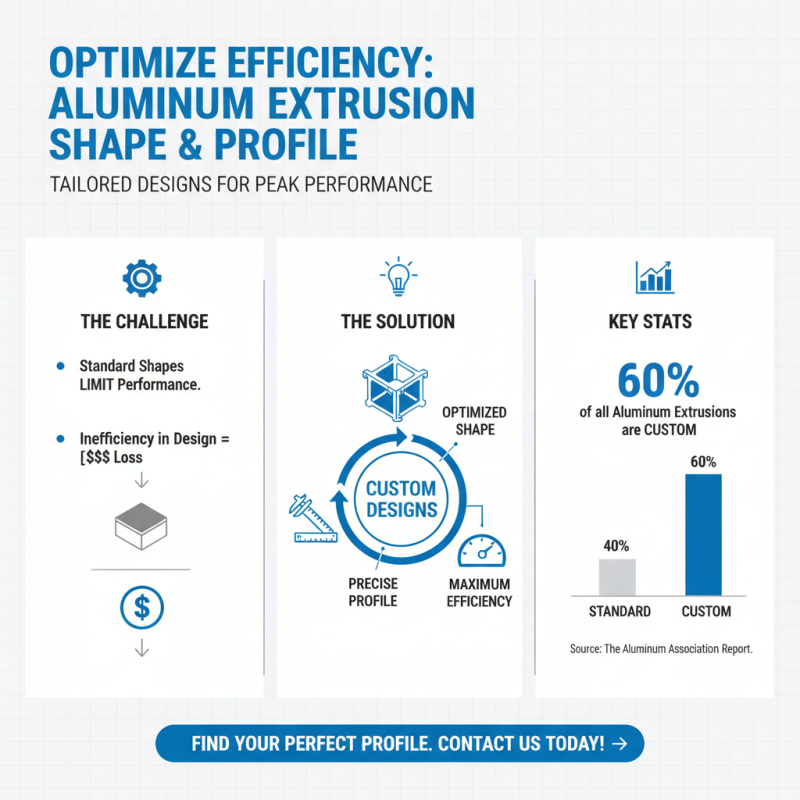
Choosing the right shape and profile for your aluminum extrusion can significantly impact your project's efficiency. Each application requires a specific design to optimize performance. According to a report by the Aluminum Association, nearly 60% of all extrusions are deemed "custom", highlighting the importance of tailored designs.
When selecting profiles, consider weight and strength. For lightweight yet sturdy applications, thin-wall extrusions may suffice. They conserve material and reduce shipping costs. However, for heavy-duty uses, thicker profiles provide the necessary strength. Assess your project's needs carefully to find a balance.
Here are some tips for choosing the right profiles:
- Identify the load requirements of your project early on.
- Experiment with different shapes; small changes can lead to significant improvements.
- Review past projects for lessons learned about profile performance.
Aluminum Frame Extrusion Profiles come in various shapes, each serving distinct functions. A square profile offers stability, while a round profile can reduce aerodynamic drag. Misjudging the required shape could lead to inefficiencies. Test prototypes if possible; they can reveal weaknesses before full-scale production.
Evaluating Surface Finishing Options for Aesthetics
When selecting aluminum extrusion for your project, aesthetics are key. Surface finishing transforms the look and feel of the material. Common options include anodizing, powder coating, and polishing. Each provides unique benefits that can enhance your design.
Anodizing offers a durable layer that resists corrosion. It comes in various colors, which can be a game-changer for some projects. Powder coating delivers a thicker finish, allowing for greater color variety and texture. However, this option might hide some details of the extrusion's natural beauty. Polishing creates a sleek, shiny surface, but it may require more maintenance over time. Reflection may be beautiful, but it can also show imperfections easily.
Consider your project’s end-use. For example, Aluminum Extrusion Framing Systems used in high-traffic areas may benefit from robust finishes. Even the smallest scratch could diminish the appearance. Your choice impacts not just looks but also longevity. Balancing aesthetics with practicality is crucial, particularly as you weigh how these finishes will hold up under different conditions.
Analyzing Cost Considerations and Budget Constraints
When planning an aluminum extrusion project, budget constraints are crucial. Understanding your financial limits can significantly impact your material choice. Aluminum can vary in price based on alloy, thickness, and complexity. Therefore, a clear budget helps prioritize options that suit your needs.
Tip: Create a detailed cost breakdown. List all possible expenses. This should include materials, shipping, and processing fees. Often, hidden costs emerge later. Transparency in budgeting helps prevent unpleasant surprises.
Remember, overspending can compromise your project. If your preferred extrusion seems beyond reach, consider simpler designs. A streamlined design may save money while maintaining functionality. Evaluate all possibilities carefully. Balancing quality and cost requires thought.
Tip: Engage multiple suppliers. Get quotes for similar specifications to compare. Some vendors offer discounts for bulk purchases. It may be worth negotiating for better rates.
Reflect on how material choices affect both cost and quality. Sometimes, higher initial costs lead to long-term savings. Durability often outweighs cheaper alternatives. Aim for the best value, not just the lowest price.
Assessing Supplier Expertise and Support Services
Assessing supplier expertise and support services is vital when choosing aluminum extrusions. The right supplier can influence project success significantly. According to a recent industry report, 73% of companies experienced delays due to inadequate supplier support. These delays often stem from poor communication or lack of technical guidance.
Evaluating a supplier's expertise involves reviewing their industry experience and technical knowledge. Look for suppliers with a strong track record in your specific application. A report by the Aluminum Association notes that well-informed suppliers can increase production efficiency by up to 30%. It’s crucial to ask questions. How do they handle complex requirements? What support services do they offer during the design phase? Some suppliers may claim expertise but lack the necessary resources.
Moreover, consider the accessibility of support services. Quick response times can mitigate potential issues during production. In fact, a study showed that 65% of firms value responsive customer service highly. When problems arise, a supportive team can make a difference. They can provide insights that might not be apparent during initial design discussions. Remember, not all suppliers provide the same level of support, and weaknesses in this area can jeopardize the entire project.
FAQS
: The product aims to improve daily productivity and enhance user experience.
Use it consistently and follow the provided guidelines for best results.
Yes, many users overlook reading the instructions. This often leads to ineffective use.
Check the troubleshooting section. If problems persist, reaching out for support is helpful.
Yes, it is designed for a wide audience. However, some may find it challenging.
Some users may need time to adapt. Patience can lead to better understanding.
Regular cleaning and checking for updates will extend its lifespan.
While useful, it might not solve all problems. User feedback is important for improvement.
Reflect on usage habits. Adjusting your approach may result in better outcomes.
Yes, check the terms. Returning a product can provide a fair evaluation.
Conclusion
When selecting the best aluminum extrusion for a project, understanding the characteristics and applications of aluminum extrusion is crucial. Key factors must be identified to align with project requirements, ensuring the chosen extrusion meets functionality and design needs. Selecting the appropriate alloy enhances durability and strength, while the right shape and profile contribute to overall efficiency.
Surface finishing options can elevate the aesthetics of the product, and cost considerations alongside budget constraints play a significant role in the selection process. Lastly, it is important to assess the expertise and support services of suppliers, as their experience can greatly influence the success of the project. By carefully evaluating these aspects, one can make informed decisions when working with aluminum extrusion.